Starting IVF can bring hope, but it can also bring questions, uncertainty, financial concerns, and emotional pressure. Fertility treatment involves medical decisions as well as personal and relationship challenges. Infertility and IVF Counselling Services in Bangalore can provide a supportive space to understand the treatment journey, discuss concerns, and prepare emotionally and medically for the decisions ahead.
Infertility counselling is not only for people experiencing depression or severe emotional distress. Professional fertility counselling can support individuals and couples dealing with stress, grief, anxiety, treatment decisions, relationship difficulties, and uncertainty during fertility care.
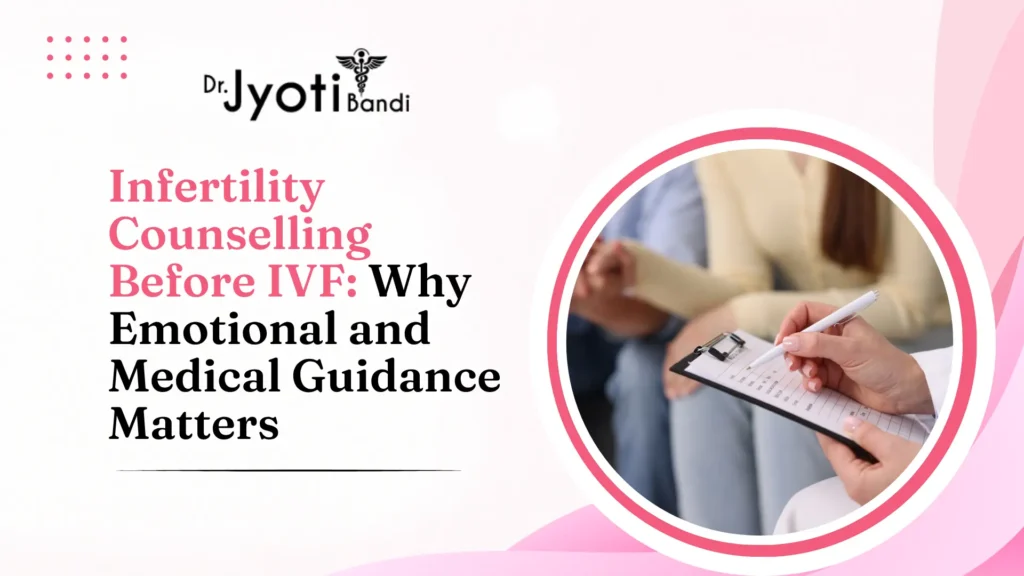
Infertility counselling is specialised support addressing the emotional, psychological, and social effects of fertility challenges. It can be useful before, during, or after fertility treatment. The American Society for Reproductive Medicine describes infertility counselling as a professional intervention intended to help reduce the physical, emotional, and psychosocial consequences associated with infertility.
Counselling may involve individual sessions, couples counselling, emotional support, coping strategies, and help with difficult treatment-related decisions.
IVF involves several stages, including fertility assessment, ovarian stimulation, monitoring, egg retrieval, fertilisation, embryo development, and embryo transfer. The exact treatment plan varies according to individual circumstances.
Understanding the process beforehand can help reduce uncertainty. Counselling can provide an opportunity to discuss expectations and prepare for the emotional ups and downs that may occur during treatment. It can also help couples communicate more openly when they have different ways of dealing with infertility.
Infertility can affect emotional wellbeing in different ways. Some people experience anxiety about treatment outcomes, while others may feel sadness, frustration, guilt, isolation, or fear about another unsuccessful cycle. Treatment decisions can also become stressful when couples feel pressure from family, friends, or social expectations.
Professional emotional support provides a confidential environment where these feelings can be discussed without judgment. ASRM notes that prolonged emotional difficulties, strained relationships, and persistent preoccupation with infertility may indicate a need for additional psychological support.
Counselling can be personalised according to the individual's or couple's needs. It may include:
Individual Emotional Support
One-to-one counselling can help individuals process anxiety, grief, disappointment, or uncertainty associated with infertility.
Couples Counselling
Partners may respond differently to fertility challenges. Counselling can encourage communication, help manage disagreements, and provide strategies for supporting each other.
Treatment Decision Support
IVF can involve important decisions about treatment options and future plans. Counselling can help patients understand their feelings and values while making informed choices.
Coping Strategies
Patients can learn practical ways to manage treatment-related stress, maintain healthy routines, and cope with difficult emotions.
Support After Treatment Outcomes
Emotional support can also be valuable after an unsuccessful cycle, pregnancy loss, or other difficult fertility experiences.
Emotional preparation is only one part of the IVF journey. Medical counselling is equally important because fertility treatment should be based on an appropriate assessment.
A fertility evaluation may consider reproductive and medical history, menstrual patterns, previous pregnancies, ovarian and uterine factors, and male fertility factors. Depending on the situation, investigations may include ultrasound, hormone testing, tubal assessment, and semen analysis. This assessment helps the fertility specialist develop an individualised treatment plan rather than applying the same approach to every couple.
Counselling can also help couples develop realistic expectations about IVF. IVF is an established fertility treatment, but pregnancy is not guaranteed from every treatment cycle. Multiple factors can influence outcomes, including age, reproductive health, embryo development, and underlying fertility factors.
Understanding the treatment process and possible outcomes beforehand can help couples prepare emotionally for different possibilities.
When looking for Infertility and IVF Counselling Services in Bangalore, consider whether the care approach addresses both medical and emotional aspects of fertility treatment. Dr. Jyoti Bandi's clinic provides infertility counselling alongside fertility assessment and treatments such as IVF, IUI, ICSI, fertility preservation, and other reproductive medicine services. A personalised consultation can help you understand your fertility concerns, available treatment options, and the type of emotional support that may be helpful.
Conclusion
IVF is not simply a medical procedure; it can be an emotionally demanding journey that involves important personal decisions. Infertility and IVF Counselling Services in Bangalore can help individuals and couples prepare for treatment, communicate effectively, manage stress, and understand their options. Combining appropriate medical evaluation with compassionate emotional support can make the fertility journey more informed and personally manageable. Dr. Jyoti Bandi provides fertility care and counselling with an individualised approach to reproductive health.
FAQ’s
Counselling is not mandatory for everyone, but it can provide emotional preparation, coping strategies, and decision-making support before IVF treatment.
Yes, couples can attend counselling together to improve communication, understand each other's concerns, and develop healthier ways of coping with fertility stress.
Counselling can provide practical coping strategies and emotional support for managing anxiety, uncertainty, stress, and difficult feelings during treatment.
Counselling can begin before IVF or at any stage when fertility challenges create emotional, relationship, or decision-making difficulties.
No. Counselling complements medical fertility care by addressing emotional and psychosocial needs while fertility specialists manage diagnosis and treatment.