The first three months of pregnancy, also known as the first trimester, mark an important stage in a baby’s development. During these initial 12 weeks, a fertilised egg develops into an embryo and gradually begins forming essential organs, tissues, and body structures. The baby’s heart starts developing, tiny limbs become visible, and facial features begin taking shape. Meanwhile, the mother’s body experiences hormonal changes that may cause nausea, tiredness, breast tenderness, and food cravings. Consulting an experienced Fertility Specialist in Bangalore can provide valuable guidance about early pregnancy care, monitoring, and healthy development.
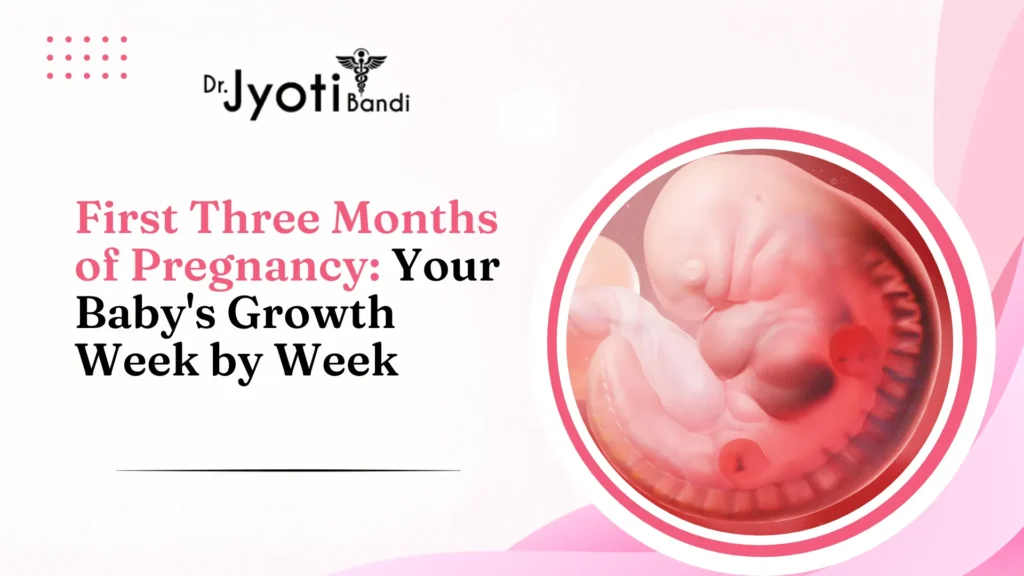
In this video, Dr. Jyoti Bandi explains the baby’s development during the first trimester, highlighting important weekly milestones and essential early pregnancy care.
Conclusion
The first three months of pregnancy are filled with remarkable developmental milestones that establish the foundation for a baby’s growth. From early heart development to the formation of limbs, facial features, and essential organs, every week brings significant changes. Understanding these changes can help parents feel more prepared throughout the pregnancy journey. Consulting an experienced Fertility Specialist in Bangalore provides access to professional guidance, appropriate monitoring, and support during these important early weeks of pregnancy.
FAQ’s
The first trimester involves early organ development, formation of facial features, limb growth, and important changes in the baby's body.
The heart begins developing early, and cardiac activity can often be detected through ultrasound around six weeks of pregnancy.
Limb buds appear during early pregnancy, gradually developing into recognisable arms, legs, fingers, and toes.
Common symptoms include nausea, fatigue, breast tenderness, frequent urination, food cravings, and sensitivity to certain smells.
A balanced diet containing fruits, vegetables, whole grains, protein, and folate-rich foods supports maternal nutrition and fetal development.