Planning motherhood for the future can sometimes mean making important decisions about fertility today. Age, career goals, personal circumstances, or medical treatment may influence when a woman wants to have children. Egg freezing offers an option to preserve unfertilized eggs for possible future use.
If you are considering Egg Freezing Treatment in Bangalore, understanding each stage of the process can make the decision easier. From ovarian stimulation and monitoring to egg retrieval and storage, every step is planned according to your individual fertility needs.
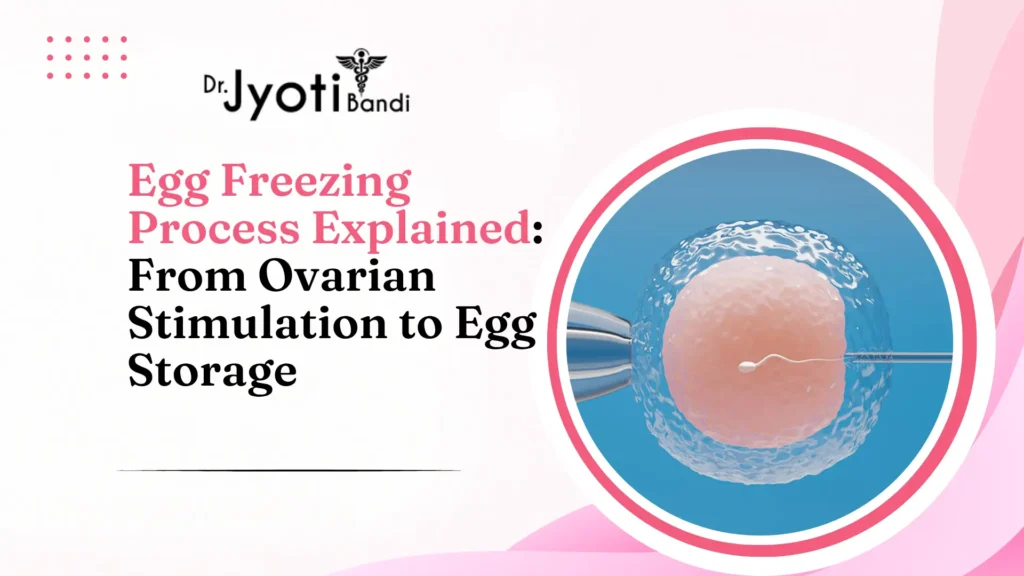
Egg freezing, also known as oocyte cryopreservation, is a fertility preservation technique in which mature eggs are collected from the ovaries and frozen for potential future use. Unlike embryo freezing, the eggs are stored unfertilized. When you decide to try for pregnancy, the frozen eggs can be thawed and fertilized using sperm in a fertility laboratory.
Step 1: Fertility Assessment
The process usually begins with a consultation and fertility assessment. Your doctor may evaluate your ovarian reserve, menstrual history, overall health, and reproductive goals.
Tests such as blood investigations and ultrasound may help your fertility specialist understand your ovarian reserve and plan an appropriate stimulation protocol.
Step 2: Ovarian Stimulation
Once the treatment plan is finalized, medications are used to stimulate the ovaries so that multiple follicles can develop during one menstrual cycle.
The stimulation phase generally lasts around 10–12 days, although the exact duration varies between women. The aim is to encourage the development of multiple mature eggs rather than relying on the single egg normally released during ovulation.
Step 3: Monitoring Follicle Growth
Regular monitoring is an important part of egg freezing. Ultrasound scans and, when required, blood tests help your doctor track follicular growth and hormone levels.
Based on your response to medication, the treatment dosage may be adjusted. Monitoring also helps determine the appropriate timing for egg retrieval.
Step 4: Trigger Medication
When the follicles reach the desired stage of development, a trigger medication is administered to support final egg maturation.
The timing of this medication is carefully planned because egg retrieval needs to take place at the appropriate time after the trigger.
Step 5: Egg Retrieval
Egg retrieval is a short procedure performed under sedation. Using ultrasound guidance, the fertility specialist carefully collects mature eggs from the ovaries.
The retrieved eggs are immediately transferred to the embryology laboratory, where they are assessed for maturity and suitability for freezing.
Step 6: Vitrification and Egg Storage
Mature eggs are frozen using a rapid freezing technique called vitrification. This method helps preserve the delicate structure of the eggs during the freezing process.
The frozen eggs are then stored under controlled laboratory conditions until you decide to use them in the future.
When you are ready to pursue pregnancy, the frozen eggs are carefully thawed. Suitable eggs are then fertilized with sperm in the laboratory, commonly using ICSI, to help create embryos. The resulting embryo may subsequently be considered for transfer into the uterus as part of fertility treatment.
No. Freezing 10 eggs does not mean that you will have 10 babies. The frozen eggs are individual unfertilized eggs, and not every egg may survive the thawing process, fertilise successfully, develop into a healthy embryo, or result in a pregnancy. The number of eggs frozen can improve the available chances for future treatment, but it cannot predict or guarantee a specific number of babies. Your age at the time of freezing, egg quality, and future treatment outcomes can all influence the chances of pregnancy.
No. Egg freezing does not remove all the eggs from your ovaries. During ovarian stimulation, medications encourage multiple follicles to develop so that several mature eggs can be collected during egg retrieval. Only the eggs that are retrieved are frozen. Your ovaries continue to contain eggs that are not retrieved, and your fertility specialist can explain how many eggs may be expected to be collected based on your ovarian reserve and response to stimulation.
Egg freezing is not a guarantee of future pregnancy. The number and quality of eggs that can be collected can vary from one woman to another. Age at the time of freezing, ovarian reserve, response to stimulation, number of mature eggs retrieved, and future reproductive factors can influence outcomes.
A fertility specialist can explain your individual circumstances and help you understand realistic expectations before starting treatment.
Choosing the right fertility centre is an important part of the egg freezing journey. DYU Healthcare provides personalized fertility care based on each woman’s reproductive goals, ovarian reserve, and individual fertility needs. From fertility assessment and ovarian stimulation to egg retrieval, vitrification, and storage, the process is supported by experienced fertility specialists and advanced laboratory practices.
Conclusion
Egg freezing involves several carefully planned stages, beginning with fertility assessment and ovarian stimulation, followed by monitoring, egg retrieval, vitrification, and long-term storage. Understanding each step can help you approach fertility preservation with greater clarity.
If you are exploring Egg Freezing Treatment in Bangalore, Dr. Jyoti Bandi can guide you through the process and help create a personalized fertility preservation plan based on your reproductive goals.
FAQ’s
The stimulation and monitoring phase generally takes around 10–12 days, followed by egg retrieval and immediate freezing.
Egg retrieval is performed under sedation, so discomfort during the procedure is minimized. Mild cramping may occur afterward.
The number varies based on age, ovarian reserve, and treatment response. Your fertility specialist can discuss an individualized target.
Eggs can be stored for extended periods under appropriate laboratory conditions, subject to applicable regulations and consent requirements.
Yes, frozen eggs can be thawed and fertilized when you are ready to pursue pregnancy in the future.